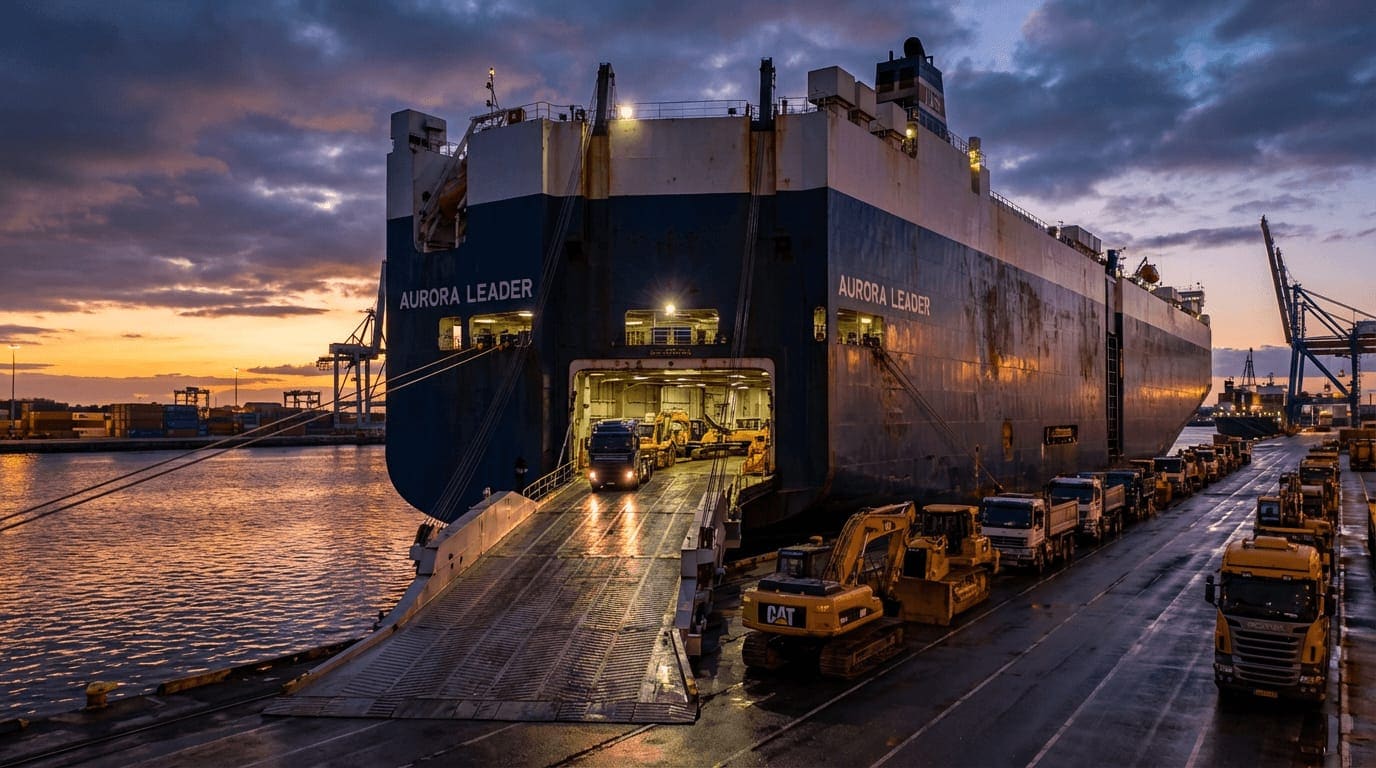
Roll-On/Roll-Off Vessel Shipping
RoRo (Roll-on/Roll-off) vessels are specialized ships designed to carry wheeled cargo that can be driven on and off the vessel under its own power or using terminal tractors.
Overview
Roll-on/Roll-off (RoRo) vessels are purpose-built ships with built-in ramps allowing wheeled cargo to roll on and off the ship. This eliminates the need for cranes and dramatically speeds loading/discharge operations. RoRo is the preferred method for shipping vehicles, construction equipment, agricultural machinery, and other self-propelled or towable cargo. Major RoRo operators include Wallenius Wilhelmsen, EUKOR, and NYK.
Specifications
Common Use Cases
Best For
- Self-propelled vehicles and equipment
- High-volume vehicle shipments
- Equipment that can be towed
- Regular scheduled shipping needs
- Items sensitive to crane handling
Advantages
- Fast loading and discharge
- No crane required
- Lower handling costs than LoLo
- Reduced cargo damage risk
- Regular sailing schedules
- Door-to-door tracking available
Limitations
- Cargo must be wheeled or on trailers
- Less flexible than breakbulk
- Route limitations for some destinations
- Weather can delay ramp operations
- Deck height restrictions
- Not suitable for static heavy lifts
Loading & Handling Tips
Frequently Asked Questions
What does CEU mean for RoRo vessels?
CEU (Car Equivalent Unit) measures RoRo vessel capacity, where one CEU equals a standard automobile. A vessel with 6,000 CEU capacity can carry 6,000 standard cars, or fewer larger vehicles.
Can non-wheeled cargo ship on RoRo?
Yes, static cargo can be placed on MAFI trailers or rolltrailers which are then driven onto the RoRo vessel. This is common for breakbulk and project cargo.
How do I prepare equipment for RoRo shipping?
Clean equipment thoroughly (especially for Australia/NZ), drain fluids to safe levels, disconnect batteries, secure loose parts, and ensure the equipment can be driven or towed.
Related Equipment
Need Help Choosing Equipment?
Our equipment specialists can recommend the best shipping solution for your cargo.