
RoRo vs Container vs Flat Rack vs Breakbulk: Choosing the Right Shipping Method
The four ways to ship a vehicle or machine across an ocean, and a clear framework for choosing the cheapest safe option for your cargo and destination.
Seaway Project Cargo Team
Project Cargo & Heavy-Lift Specialists
Choosing the wrong shipping method is the most expensive mistake in heavy-equipment logistics. Here's a clear framework for the four options: RoRo, container, flat rack and breakbulk.
RoRo (Roll-on/Roll-off)
Cargo is driven or towed onto a dedicated vessel and secured on its wheels or tracks.
- Best for: running, self-propelled, wheeled units — cars, trucks, wheel loaders, mobile cranes.
- Pros: usually the most economical for eligible cargo; no container packing.
- Cons: the unit must roll and steer; limited cargo protection; port availability varies.
- Learn more: RoRo shipping service.
Container (standard, high-cube, or dismantled)
Cargo is loaded into an enclosed box — assembled if it fits, or knocked down if it doesn't.
- Best for: parts, attachments, smaller machines, and anything that benefits from enclosed protection or more frequent sailings.
- Pros: best protection; most sailings; easy inland moves.
- Cons: size limits; possible dismantle/reassembly cost. Use the container space calculator to check fit.
Flat rack / open top
Specialized container equipment for out-of-gauge pieces, crane- or forklift-loaded and lashed down.
- Best for: single over-width or over-height pieces that can't be knocked down to fit a box but don't need full breakbulk.
- Pros: keeps the frequency and handling benefits of container service for OOG cargo.
- Cons: more expensive than standard boxes; requires proper lashing and surveys.
Breakbulk (heavy-lift)
The piece is lifted aboard a general-cargo or heavy-lift ship by the ship's own cranes or a shore crane, then stowed in the hold or on deck, outside any container.
- Best for: indivisible pieces too large or heavy for a flat rack: large mining trucks and shovels, crawler cranes that cannot be split further, transformers, boats and long structures.
- Pros: practically no size limit; the piece moves whole, so there is no dismantling; heavy-lift ships can lift several hundred tonnes in one hook.
- Cons: fewer sailings and fewer ports than container service; needs a lift plan, cradles or saddles and a survey; port handling takes longer.
- Learn more: breakbulk ocean shipping.
A simple decision guide
| Question | If yes |
|---|---|
| Does it run, roll, and steer? | RoRo is likely cheapest |
| Does it fit (or knock down to fit) a box? | Containerize |
| Is it a single over-gauge piece that can't be knocked down? | Flat rack / open top |
| Is it indivisible and massive? | Breakbulk heavy-lift |
Still unsure? Send us the dimensions and destination and we'll model the options. Request a quote or check the route and sailings and import duty first.
Related Articles
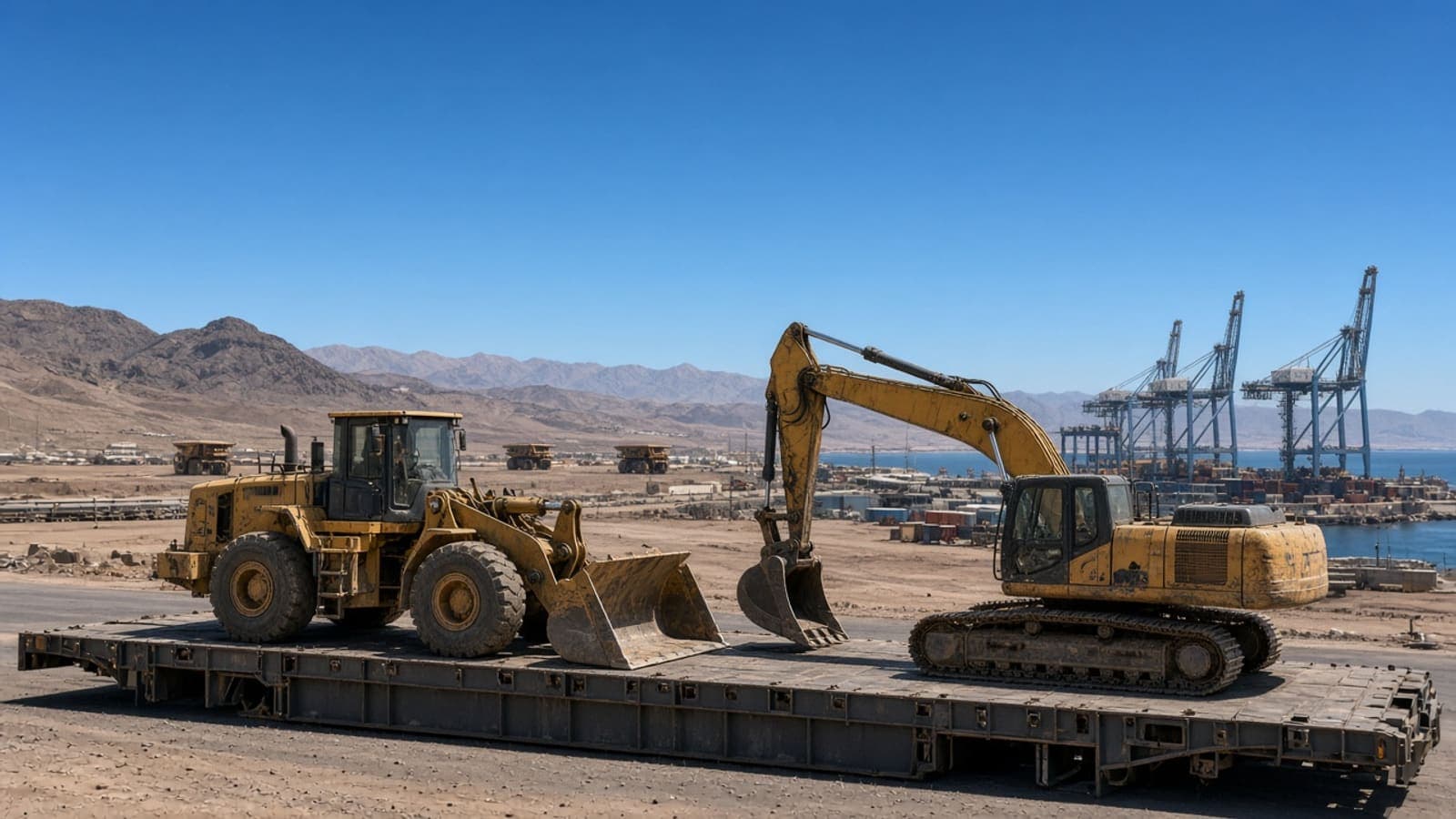
Shipping heavy equipment and trucks from the United States to Chile (2026)
Used excavators and dozers can go to Chile if clean; used on-road trucks cannot. SAG wash rule, 0% FTA duty, NYK RoRo, ports and the inland leg, verified October 2026.
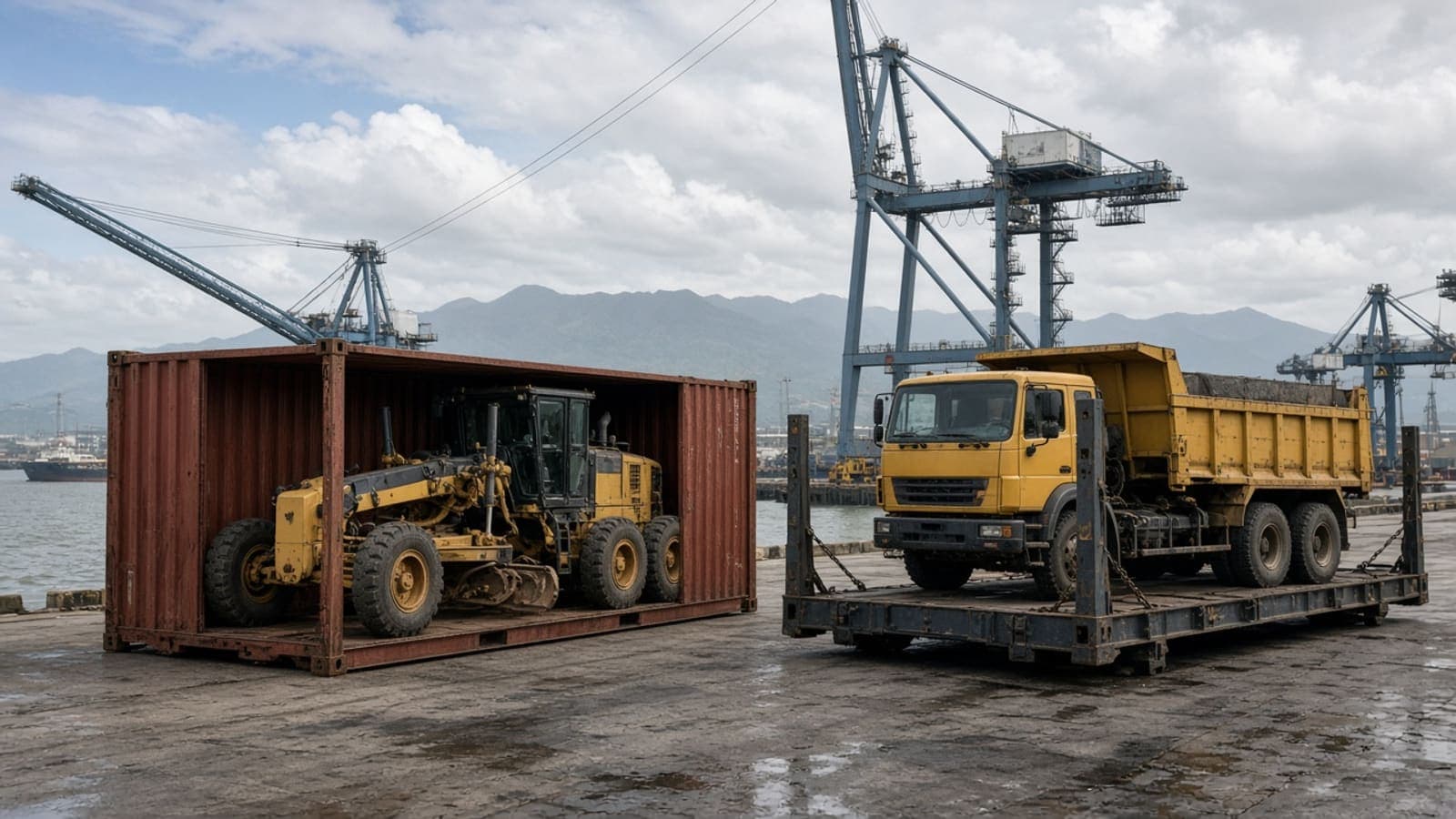
Shipping heavy equipment and trucks from the United States to Ecuador (2026)
Used machinery up to 15 years old can enter Ecuador; on-road trucks must be new. Ports, sailings, licences, taxes and the inland leg, verified October 2026.
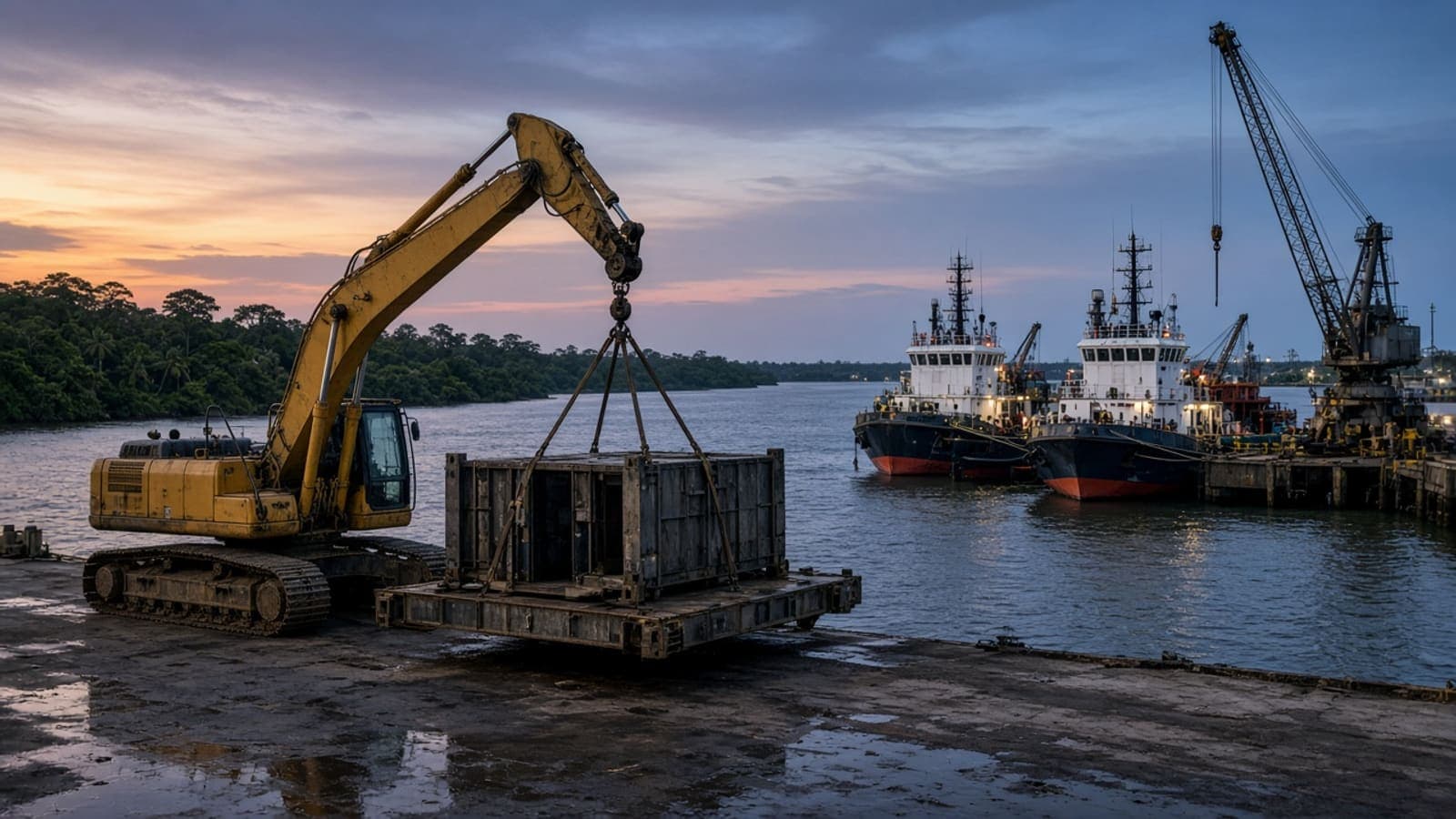
Shipping heavy equipment and trucks from the United States to Guyana (2026)
Verified October 2026: GRA duty-free codes, the vehicle inspection rule, the left-hand-drive ban, Georgetown port limits and the US ports that actually serve Guyana.