
Shipping to the Middle East & GCC (2026): Import Duty, VAT & Vehicle Rules by Country
From the low, predictable 5% GCC duty to strict age limits and SABER/SASO conformity in Saudi Arabia, here is what it really takes to import vehicles, machinery, and project cargo into the Middle East.
Seaway Project Cargo Team
Project Cargo & Heavy-Lift Specialists
The Gulf is one of the most import-friendly regions in the world on paper — a flat 5% customs duty across the GCC — but the details (VAT, conformity certificates, and vehicle age limits) decide whether your shipment clears smoothly or sits at the port. Here is the country-by-country reality.
The GCC baseline
Under the GCC Unified Customs Law, member states apply a 5% customs duty on the CIF value. What differs is VAT and the vehicle rules layered on top.
| Country | Import duty | VAT | Vehicle rule highlight | Main gateway |
|---|---|---|---|---|
| UAE | 5% | VAT 5% (~10.25% combined) | Used under ~10 yrs; GCC conformity; LHD | Jebel Ali |
| Saudi Arabia | 5% | VAT 15% | Light vehicles 5 model years or newer; no salvage/RHD; SABER/SASO | Jeddah / Dammam |
| Oman | 5% | VAT 5% | GCC-origin under 2 yrs can be duty-free | Sohar / Salalah |
| Qatar | 5% | None | Low overall tax load | Hamad Port |
| Kuwait | 5% | None | Port/inspection fees add ~10-15% | Shuwaikh / Shuaiba |
| Jordan | 0% (cars) | GST 16% (+2% income tax) | Tiered special tax; Nov 2025 reform | Aqaba |
| Iraq | By HS code | Confirm | LHD preferred; reconstruction demand | Umm Qasr / via Jordan |
| Israel | By HS code | VAT 18% | High emissions-based purchase tax | Haifa / Ashdod |
| Lebanon | By HS code | VAT 11% | ~8-yr age (historical); confirm feasibility | Beirut / Tripoli |
| Egypt | ~40% to ~135% (engine-based) | VAT 14% | Among the highest stacks globally | Alexandria / Port Said |
Indicative planning figures, each sourced to the national customs authority and last verified June 2026.
What catches importers out
- Saudi Arabia's 5-year rule. Light vehicles must be 5 model years or newer (2021+ in 2026); salvage, ex-taxi/police, and right-hand-drive units are prohibited. You must register on SABER and obtain a SASO Certificate of Conformity, plus a pre-shipment inspection, before arrival — customs refuses entry without it.
- UAE conformity. Non-GCC-spec vehicles need a GCC Conformity Certificate (MoIAT/ECAS-ESMA) before RTA registration, and the entry port should match the emirate of registration. Jebel Ali is also a top re-export hub (a refundable 5% deposit on re-exported goods).
- No-VAT havens. Qatar and Kuwait levy no VAT as of 2026, giving them among the lowest import-tax loads in the region.
Method and routing
Most US lanes to the Gulf run 20-40 days via container, RoRo, or breakbulk. Over-gauge machinery and project cargo ship on flat racks or dismantled and containerized; see our project cargo service.
Plan your shipment
Estimate your landed cost with the Import Duty & Tax Estimator, check the Middle East trade lane, or request a quote.
Related Articles
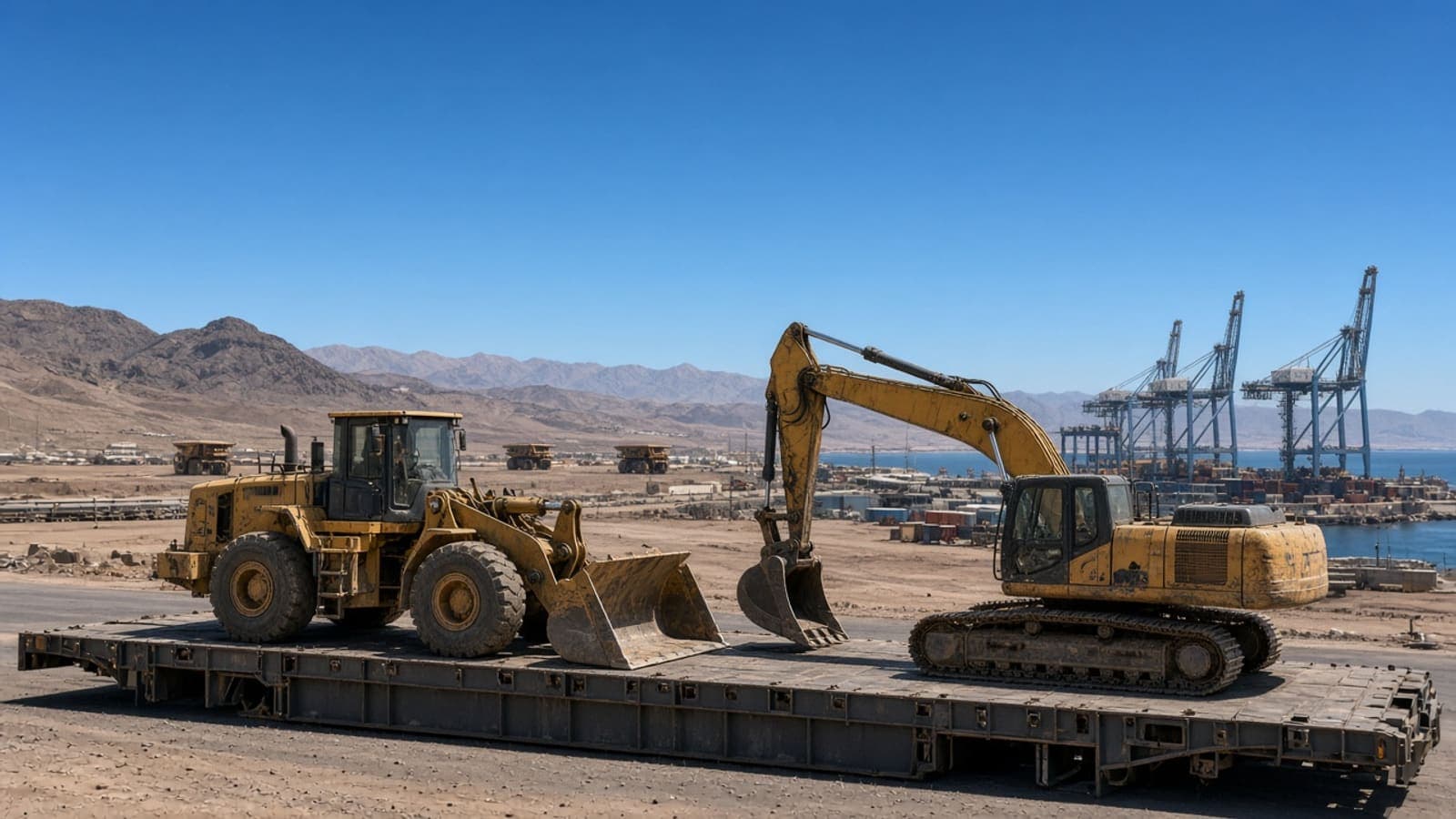
Shipping heavy equipment and trucks from the United States to Chile (2026)
Used excavators and dozers can go to Chile if clean; used on-road trucks cannot. SAG wash rule, 0% FTA duty, NYK RoRo, ports and the inland leg, verified October 2026.
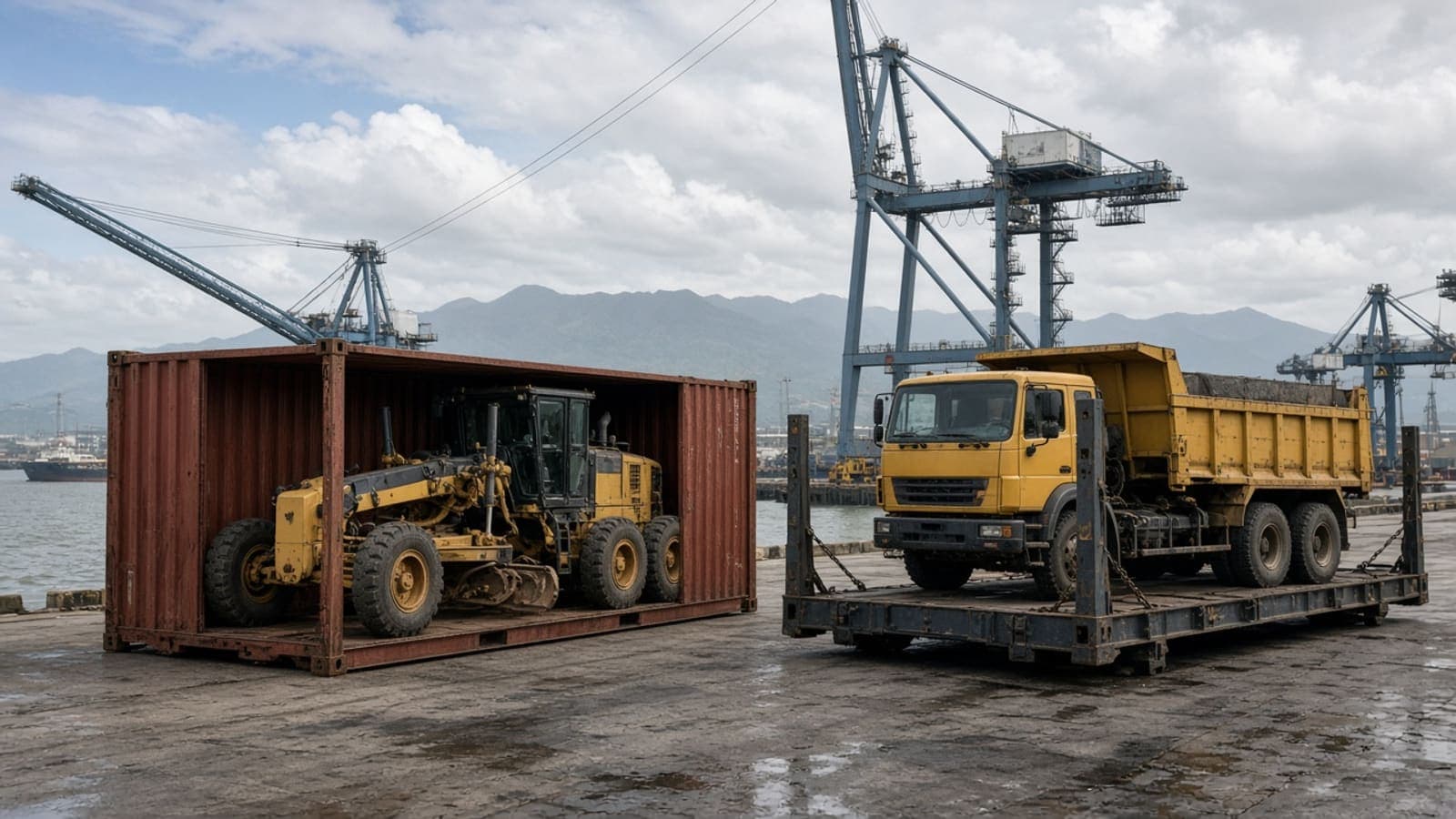
Shipping heavy equipment and trucks from the United States to Ecuador (2026)
Used machinery up to 15 years old can enter Ecuador; on-road trucks must be new. Ports, sailings, licences, taxes and the inland leg, verified October 2026.

Shipping heavy equipment and trucks from the United States to Guyana (2026)
Verified October 2026: GRA duty-free codes, the vehicle inspection rule, the left-hand-drive ban, Georgetown port limits and the US ports that actually serve Guyana.