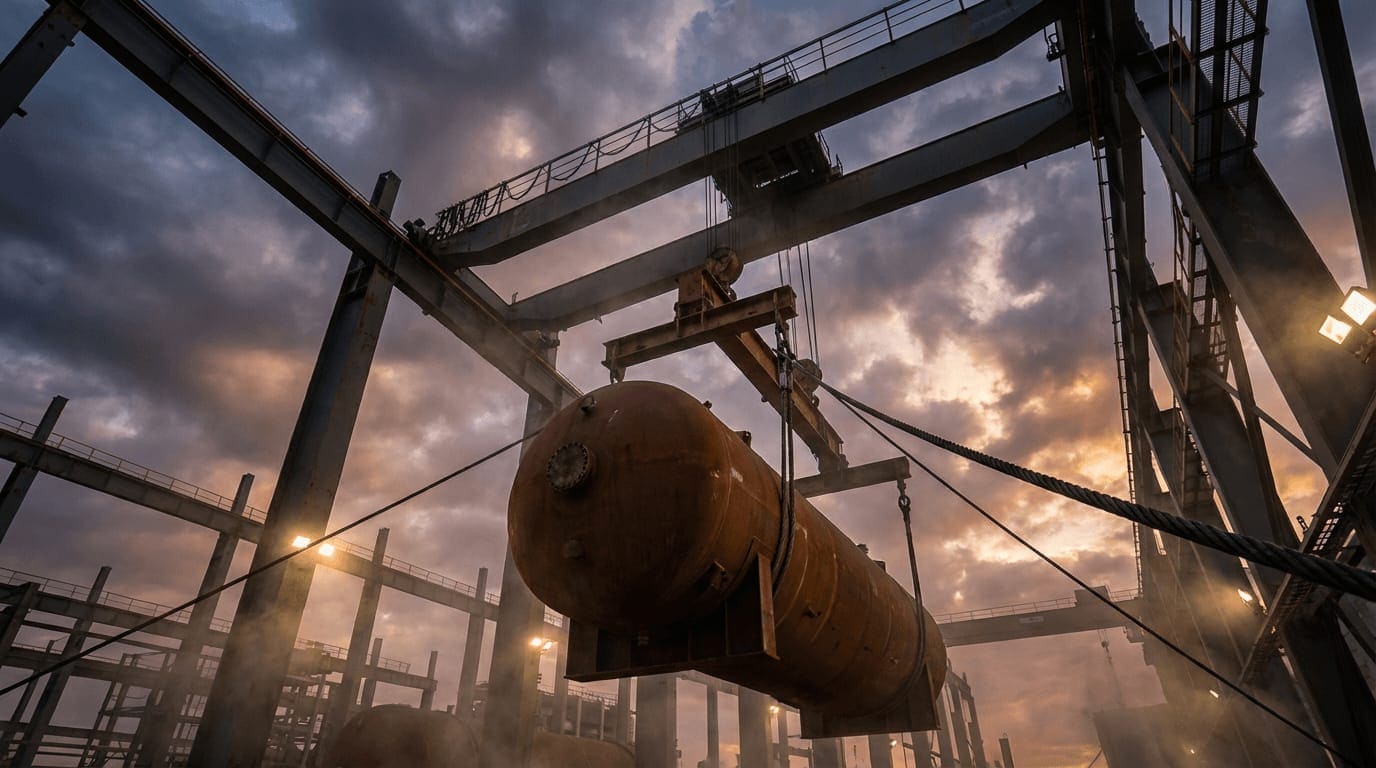
Specialized services
Export preparation, compliance and handling for machinery
Before a machine ships it is filed with U.S. Customs[1][2], cleaned to the destination’s standard[3][4], drained and secured to the hazardous materials rules[5], and blocked and lashed to the carrier’s figures[6]. These services cover each step.
Which service you need
| Method | Use it when | Avoid it when |
|---|---|---|
| Customs brokerage | Every export: EEI over $2,500 per Schedule B line, every vehicle, and the 72-hour rule for used machines[1][2]. | Never skipped; in a routed export the buyer’s agent may file instead. |
| Washing and inspection | Used machines to Australia, New Zealand and other countries that inspect for soil and plant material[3][4]. | New machines shipped straight from the factory, where the destination does not require it. |
| Dangerous goods handling | Any machine with fuel or batteries, and anything shipped with fluids, gases or chemicals[5]. | Engines and tanks fully drained and purged, with no battery. |
| Lashing and securing | Every flat rack, open top, roll trailer and container load[6]. | A RoRo machine driven aboard: the ship’s crew lash it. |
| Disassembly and crating | The machine fits a 7 ft 8 in (2.34 m) container door once the bucket, cab or counterweight comes off. | The buyer cannot refit the parts at destination. |
| Fumigation and heat treatment | Wood packaging (ISPM 15) and cargo for Australia in the stink bug season[7][8]. | No wood is used and the destination has no seasonal rule. |
Rules behind these services
- Electronic Export Information (15 CFR 30)U.S. Census Bureau
Electronic Export Information is filed in AES for each Schedule B number worth more than $2,500 going to one consignee on one conveyance, and for every vehicle whatever its value. For vessel cargo it is due at least 24 hours before loading; the Internal Transaction Number (ITN) goes to the carrier with the booking.[1][9]
Applies to: Any Schedule B line over $2,500, and every vehicle
- Used self-propelled vehicles: 72-hour ruleU.S. Customs and Border Protection
U.S. regulations count self-propelled construction and agricultural machinery as vehicles. A used one must be filed in AES at least 72 hours before export, whatever its value or destination, and the ITN, the VIN or serial number and the ownership documents go to CBP at the port of export. Filing after departure is not allowed.[10][2][9]
Applies to: Used machines that drive: excavators, loaders, dozers, tractors, trucks
- ISPM 15 wood packagingIPPC, administered in the U.S. by USDA APHIS
Wood packaging and dunnage must be heat-treated to a core temperature of 56 °C for at least 30 minutes, or fumigated, and carry the IPPC mark with the US country code, the facility number and HT or MB. Marked wood can be reused; repaired or remanufactured wood must be treated and marked again.[7]
Applies to: Crates, skids, blocking and dunnage
- Engines, vehicles and machinery as hazardous materials (49 CFR 173.220)PHMSA
A machine is regulated as a hazardous material when it carries fuel, a wet, sodium or lithium battery, or other hazardous materials. A tank of flammable liquid fuel such as gasoline is drained to 500 mL or less and closed; a self-propelled machine on diesel may keep its fuel if the tank has room for expansion and the cap is closed. Batteries stay installed and secured, wet batteries upright, with the terminals protected against short circuits.[5]
Applies to: Machines with fuel, batteries or other hazardous materials, by road, vessel or air
- Used machinery cleanliness: AustraliaAustralian Department of Agriculture, Fisheries and Forestry
Used machinery must arrive free of soil, seeds and plant or animal material, which can mean partly dismantling the machine to clean hollow and concealed sections. Every consignment is inspected on arrival; a machine with low contamination is re-cleaned at an approved site at the importer’s cost, and a heavily contaminated one can be ordered out of the country.[3]
Applies to: Used machinery and parts shipped to Australia
- Brown marmorated stink bug season: AustraliaAustralian Department of Agriculture, Fisheries and Forestry
Target high-risk goods shipped from the United States between 1 September and 30 April need mandatory treatment, judged by the shipped-on-board date. Flat rack, open top and breakbulk cargo must be treated before it leaves; if untreated, it is refused discharge or sent back. Heat treatment holds 56 °C at the coldest surface for 30 minutes, and for break bulk pieces under 6,610 lb (3,000 kg) 60 °C for 10 minutes.[8]
Applies to: Machinery, vehicles, steel and other listed goods (HS chapters 84, 85 and 87 among them) shipped from the U.S. by sea, 1 September to 30 April
Questions about export preparation
Do I need a customs broker to export from the U.S.?
Not a licensed broker: U.S. export filings are made in AES by the exporter or an authorized agent, such as a forwarder, under a power of attorney. A licensed customs broker is needed for import entries made on someone else’s behalf.
Does every used machine need washing?
Not for every country, but Australia and New Zealand inspect used machinery on arrival and reject soil and plant material, and many buyers ask for a wash anyway. We book it near the port.
Can a machine ship with fuel in the tank?
A self-propelled machine on diesel can, if the tank has room for expansion and is closed. Gasoline tanks are drained to 500 mL or less.
Our Specialized Services Services
- Customs Brokerage
Every U.S. export of more than $2,500 per Schedule B line, and every vehicle, is filed in AES; a used machine that drives is filed at least 72 hours before export, with its title or bill of sale presented to CBP at the port.
- Permitting & Route Surveys
A load over 80,000 lb gross, 102 in wide or the state height limit needs a permit from every state on the route; the route survey finds the path its height, width and axle weights can actually travel.
- Warehouse & Transload
Transload moves cargo from the truck or rail car it arrived on into the container, flat rack or trailer it sails on. The weight is spread over the floor, the load is blocked and lashed, and the unit is weighed for its VGM before it goes to the terminal.
- Cargo Lashing & Securing
On the road the tiedowns must hold at least half the load’s weight, with four or more on a machine of 10,000 lb or more. At sea the lashings go to the rack’s rated points, 11,000 lb (5,000 kg) each on the carrier’s own flat racks, and welding to the rack is not allowed.
- Rigging & Lifting Services
A crane lift at a U.S. site needs firm, drained and graded ground, a certified operator, a qualified rigger for anyone working in the fall zone, and a signal person when the operator cannot see the load.
- USDA Washing & Inspection
Australia and New Zealand inspect used machinery on arrival and reject soil, seeds and plant material: the machine is cleaned inside and out before it ships, and for New Zealand a cleaning certificate reaches MPI before arrival.
- EPA/DOT/CARB Compliance
A new engine built to a foreign standard is exported under EPA’s export exemption, a machine with fuel or batteries travels under DOT hazardous materials rules, and an off-road diesel machine sold in California carries CARB’s disclosure on its bill of sale.
- IMO Dangerous Goods Handling
A machine with fuel, a wet, sodium or lithium battery or other hazardous materials is regulated in transport by road, sea and air. Gasoline is drained to 500 mL or less, diesel may stay with room for expansion, and batteries stay installed, secured and protected.
- Cargo Surveys & Condition Reports
A condition report records the machine, its serial number and every mark on it before it ships; a loading survey checks the lashing, the declared dimensions and the weight against the carrier’s rules, so a wrong figure does not lead to a re-rating or a missed sailing.
- Export Cargo Fumigation
Wood used to crate, block or brace cargo is heat-treated to 56 °C at the core for 30 minutes or fumigated, and marked to ISPM 15. Machinery shipped from the U.S. to Australia between 1 September and 30 April needs stink bug treatment as well.
- Disassembly, Crating & Containerization
Taking off the bucket, cab, counterweight or tracks brings many machines inside a container’s 7 ft 8 in (2.34 m) wide door; the parts are crated in ISPM 15 marked wood and loaded so their weight spreads along the floor.
- Machinery Skidding & Base Fabrication
A skid or base spreads a machine’s weight and gives the lashings somewhere to hold. On a 40′ flat rack it matters: a load on 6 ft 7 in (2 m) of the beams takes 56,400 lb (25.6 t) against 54 US tons (49.1 t) over the full length, and beams can lengthen the footprint by up to 3 ft 3 in (1 m) at each end.
- Specialized Container Loading & Securing
Inside a container the lashing points are rated only 2,200 lb (1,000 kg), so a machine is held mainly by blocking and bracing, with its weight spread along the floor and the packed box weighed for its VGM before loading.
Sources
Every figure on this page comes from the documents below, each checked on the date shown. Carriers and authorities revise them, so we confirm the current figure when we book.
- [1]eCFR, 15 CFR 30.37 Miscellaneous exemptions (Foreign Trade Regulations), checked October 18, 2026
- [2]U.S. Customs and Border Protection, Exporting used self-propelled vehicles, checked October 18, 2026
- [3]Australian Department of Agriculture, Fisheries and Forestry, Cleanliness requirements for imported machinery, checked October 18, 2026
- [4]New Zealand Ministry for Primary Industries, Steps to importing vehicles, machinery, or parts, checked October 18, 2026
- [5]eCFR, 49 CFR 173.220 Internal combustion engines, vehicles and machinery (hazardous materials), checked October 18, 2026
- [6]Hapag-Lloyd, A Guide for the Loading and Lashing of Cargo on Hapag-Lloyd Flatracks, checked October 18, 2026
- [7]USDA APHIS, Export ISPM 15-compliant wood packaging material, checked October 18, 2026
- [8]Australian Department of Agriculture, Fisheries and Forestry, Seasonal measures for brown marmorated stink bug, checked October 18, 2026
- [9]U.S. Census Bureau, Foreign Trade Regulations FAQs, checked October 18, 2026
- [10]eCFR, 19 CFR 192.1 Definitions (used self-propelled vehicles), checked October 18, 2026
Send us the machine and the destination
Give us the model or the measured dimensions and weight. We come back with the method, the sailing and a price, and the figures behind them.