Phytosanitary certificate
USDA phytosanitary certificate for used machinery
A USDA inspector issues PPQ Form 577, the U.S. phytosanitary certificate, after inspecting the shipment[1]. Peru requires that certificate for used agricultural machinery[4], and the European Union requires one for used agricultural and forestry machinery listed in Annex XI[5].
- APHIS user fee for a commercial export or reexport certificate[3]
- $106
- fee for a noncommercial certificate, or a commercial one invoiced under $1,250 when the shipper asks for the low-value rate[3]
- $61
- APHIS administrative fee when a state or county officer issues the certificate through PCIT[3]
- $6
- when Peru’s rule for used agricultural machinery took effect[4]
- 1 Sep 2024
What PPQ Form 577 is
PPQ Form 577 is the phytosanitary certificate the United States issues for a consignment of domestic plants or unprocessed plant products. An inspector signs a separate certificate for each consignment, from an inspection of the lot, and the original is delivered to the applicant. The program certifies exports as a service. It does not require a certificate the destination has not asked for, and USDA accepts no liability for the one it signs[1].
The Export Program Manual treats used agricultural machinery as eligible for PPQ Form 577 or for PPQ Form 579, the reexport certificate, and refers the officer to the used-agricultural-machinery guidance in the Phytosanitary Certificate Issuance and Tracking System (PCIT). The application names the commodity and the destination so the Authorized Certification Official can determine the entry requirements and the inspection. The certificate is dated the day the officer signs it[2].
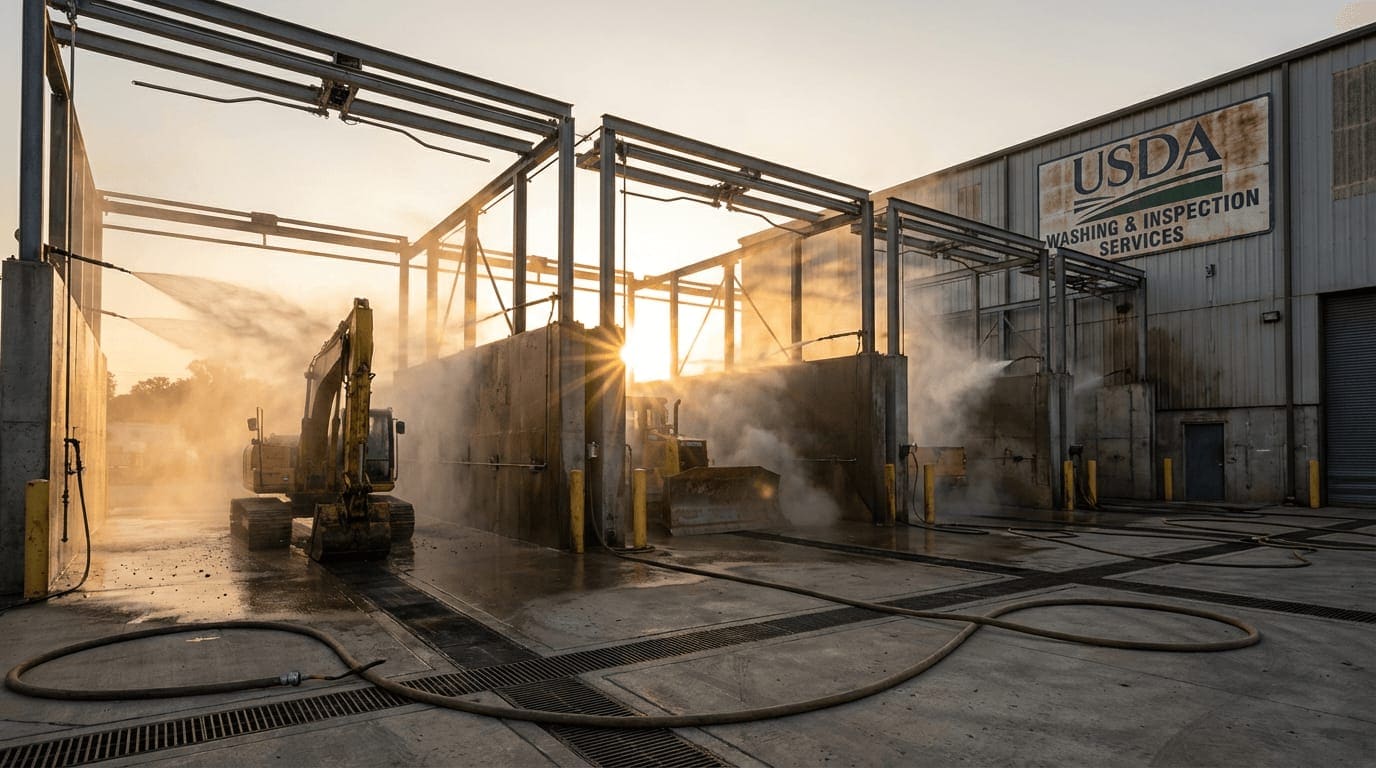
We clean the machine, prepare that application and present the machine for inspection. The officer issues the certificate. A forwarder does not.
Which shipment needs the certificate
| Method | Use it when | Avoid it when |
|---|---|---|
| Used agricultural machinery to Peru | Any quantity of used agricultural machinery or used agricultural equipment. SENASA requires a phytosanitary certificate from the country of provenance, with an additional declaration that it was cleaned inside and out and is free of pests, soil and plant debris, naming the method[4]. | A machine that has never been used. The resolution covers used machinery and used equipment. |
| Used agricultural or forestry machinery to the EU | The machine has already been operated and its CN code is in Annex XI, Part A, point 1: ploughs, harrows, seeders, manure spreaders, balers, combine harvesters, forestry machinery, and agricultural and forestry tractors. Annex VII requires an official statement that it was cleaned and is free from soil and plant debris[5]. | The destination is Switzerland, or the machine has not been operated for agricultural or forestry purposes. |
| Used machinery to Chile | The machine is cleaned inside and out in the United States and presented for SAG inspection on arrival. Resolución 3103 covers used agricultural, forestry, gardening and earthmoving machinery[6]. | Booking a PPQ 577 before the importer’s conditions ask for an official statement and the certification official accepts the commodity. An excavator is not the used agricultural machinery the Export Program Manual names[2]. |
| Used machinery to Australia or New Zealand | The destination inspects on arrival. Australia can order a contaminated machine re-cleaned or exported. New Zealand wants a cleaning certificate, signed by the person who did the work, before the machine arrives[7][8]. | The buyer’s permit also asks for a U.S. phytosanitary certificate: the wash and the PPQ 577 inspection are booked together. |
What Peru requires on the certificate
Resolución Directoral N.° 027-2024-MIDAGRI-SENASA-DSV has applied since 1 September 2024 to used agricultural machinery and used agricultural equipment, whatever the quantity, the use, or the country of origin or provenance.
| Requirement | What the resolution requires[4] |
|---|---|
| Cleaning | Inside and out, in the country of provenance, by pressure washing, steam, compressed air, vacuum or another method SENASA has authorized. The machine is taken apart if that is what it takes to remove pests, soil and plant debris. |
| Certificate | A phytosanitary certificate from the national plant protection organization of the country of provenance. From the United States, that certificate is PPQ Form 577. |
| Additional declaration | “Las maquinarias agrícolas usadas y/o equipos agrícolas usados han sido sometidos a un proceso de limpieza interna y externa y se encuentran libres de plagas, suelo (tierra) y restos vegetales (indicar método de limpieza utilizado).” |
| Fusarium TR4 | Countries where Fusarium oxysporum f. sp. cubense Tropical Race 4 is present also apply a pre-shipment disinfectant, at least seven days before loading. |
| On arrival | SENASA inspects at the point of entry. If soil, plant debris or a pest is suspected, or the inspection cannot be completed, the inspector can order partial or full dismantling at a SENASA-authorized site. The importer pays. |
What the European Union requires
Regulation (EU) 2019/2072 puts already-operated agricultural and forestry machinery on the list of objects that enter the Union with a phytosanitary certificate, from any third country other than Switzerland.
| Point | Rule[5] |
|---|---|
| Annex XI | Machinery and vehicles which have been operated for agricultural or forestry purposes, including ploughs, harrows, seeders, manure spreaders, balers, combine harvesters, forestry machinery and agricultural and forestry tractors, each under its CN code. |
| Annex VII, point 2 | An official statement that the machinery or vehicles have been cleaned and are free from soil and plant debris. |
| Origin | Any third country other than Switzerland. |
How a PPQ 577 is obtained
- 01
Confirm the commodity
Used agricultural machinery is the category the Export Program Manual treats as eligible for PPQ Form 577 or 579. The officer checks the destination in the Phytosanitary Export Database before accepting anything else[2].
- 02
- 03
Clean to that standard
Pressure wash, steam, compressed air and vacuum, with guards and panels off where soil sits in tracks, belly pans, radiators and cabs. Peru allows those methods, and dismantling when the machine cannot otherwise be certified clean[4].
- 04
- 05
Inspection and signature
The officer inspects the shipment and signs PPQ Form 577 on that day. The original goes to the applicant. A commercial certificate issued by APHIS personnel carries a $106 user fee; the low-value and noncommercial rates are $61; a state or county certificate applied for in PCIT carries a $6 administrative fee, and the state may charge for the inspection. Overtime is extra[1][3].
- 06
Then load
The certificate number stays in the export file. Wood crates, skids and dunnage still need their own ISPM 15 mark. The phytosanitary certificate does not replace it[9].
Rules that apply
- Phytosanitary certificate (PPQ Form 577)USDA APHIS
Export certification is a service, not a condition the United States imposes on the shipper. An inspector issues one PPQ Form 577 for each consignment, from an inspection of the lot, and the original goes to the applicant. The Export Program Manual treats used agricultural machinery as eligible for PPQ Form 577 or the reexport certificate, PPQ Form 579, and sends the officer to the used-agricultural-machinery guidance in PCIT. The officer signs on the day of issue. APHIS accepts no liability for the certificate.[1][2]
Applies to: Plants and unprocessed plant products offered for export, and used agricultural machinery when APHIS treats it as eligible
- Used agricultural machinery entering PeruSENASA (Peru)
Since 1 September 2024 the machine must be cleaned inside and out in the country of provenance, by pressure washing, steam, compressed air, vacuum or another method SENASA has authorized, and taken apart if that is what it takes to leave it free of pests, soil and plant debris. It must travel with a phytosanitary certificate from the plant protection organization of the country of provenance. The additional declaration must state that the used agricultural machinery or equipment was cleaned internally and externally and is free of pests, soil and plant debris, and must name the cleaning method. Countries where Fusarium oxysporum f. sp. cubense Tropical Race 4 is present also apply a pre-shipment disinfectant at least seven days before loading. SENASA inspects at the point of entry and can order partial or full dismantling, paid by the importer, if soil, plant debris or a pest is suspected or the inspection cannot be finished.[4]
Applies to: Used agricultural machinery and used agricultural equipment, in any quantity, from any country
- Used agricultural and forestry machinery entering the European UnionEuropean Commission
Annex XI, Part A, point 1 of Regulation (EU) 2019/2072 lists machinery and vehicles which have been operated for agricultural or forestry purposes among the objects introduced into the Union with a phytosanitary certificate. The list includes ploughs, harrows, seeders, manure spreaders, balers, combine harvesters, forestry machinery and agricultural and forestry tractors, each under its CN code and only once already operated. Annex VII, point 2 requires an official statement that the machinery or vehicles have been cleaned and are free from soil and plant debris.[5]
Applies to: Machinery and vehicles already operated for agricultural or forestry purposes, from any third country other than Switzerland
- Used machinery entering ChileSAG (Chile)
Resolución Exenta N.° 3.103 requires the machine to arrive free of soil, plant debris and regulated pests. It is cleaned inside and out in the country of origin, by pressure washing, steam, forced air, vacuum or another suitable method, and taken apart if needed. SAG inspects the shipment on arrival. The importer pays for any measure SAG orders because the machine failed the inspection, and re-ships a rejected machine within the time SAG sets. Wood packaging follows Chile’s own wood rules.[6]
Applies to: Used agricultural, forestry, gardening and earthmoving machinery, trash compactors, and other used machinery SAG assigns a plant-health risk
- ISPM 15 wood packagingIPPC, administered in the U.S. by USDA APHIS
Wood packaging and dunnage must be heat-treated to a core temperature of 56 °C for at least 30 minutes, or fumigated, and carry the IPPC mark with the US country code, the facility number and HT or MB. Marked wood can be reused; repaired or remanufactured wood must be treated and marked again.[9]
Applies to: Crates, skids, blocking and dunnage
Questions about PPQ 577
Who signs the certificate?
An Authorized Certification Official, a USDA officer or a designated state or county inspector. We prepare the machine and the PCIT application and present the shipment. We do not sign PPQ Form 577.
Is PPQ 505 the export certificate?
PPQ Form 577 is the phytosanitary certificate for export. PPQ Form 579 is the reexport certificate, used when a foreign phytosanitary certificate is already in hand.
Does Chile require a PPQ 577?
Resolución Exenta N.° 3.103 requires used machinery, including earthmoving equipment, to be cleaned in the country of origin and inspected by SAG on arrival. The importer pays if the machine fails, and re-ships it if SAG rejects it. A PPQ 577 is arranged when the importer’s conditions ask for an official statement and the certification official accepts the commodity.
What must the Peru certificate say?
The additional declaration has to say that the used agricultural machinery or equipment was cleaned internally and externally and is free of pests, soil and plant debris, and it has to name the cleaning method. SENASA publishes the sentence in Spanish.
What does USDA charge?
A commercial certificate issued by APHIS personnel is $106. The fee is $61 for a noncommercial shipment, or for a commercial shipment invoiced under $1,250 when the shipper asks for the low-value rate. A state or county certificate filed in PCIT carries a $6 APHIS administrative fee, plus any fee that state charges for the inspection. Work outside regular hours is billed as overtime.
Will APHIS certify a used excavator?
The Export Program Manual names used agricultural machinery. An excavator, a mining truck or another machine outside that category is put to the certification official against the Phytosanitary Export Database before an inspection is booked. Chile can still require that excavator to arrive clean.
Sources
Every figure on this page comes from the documents below, each checked on the date shown. Carriers and authorities revise them, so we confirm the current figure when we book.
- [1]eCFR, 7 CFR Part 353 Export certification, checked October 18, 2026
- [2]USDA APHIS, Export Program Manual (PPQ Forms 577 and 579), checked October 18, 2026
- [3]eCFR, 7 CFR 354.3 User fees for certain international services, checked October 18, 2026
- [4]SENASA Perú, Resolución Directoral N.° 027-2024-MIDAGRI-SENASA-DSV (used agricultural machinery, in force 1 September 2024), checked October 18, 2026
- [5]EUR-Lex, Commission Implementing Regulation (EU) 2019/2072, Annex VII point 2 and Annex XI Part A point 1, checked October 18, 2026
- [6]SAG Chile, Resolución Exenta N.° 3.103 de 2016, requisitos fitosanitarios para maquinaria usada, checked October 18, 2026
- [7]Australian Department of Agriculture, Fisheries and Forestry, Cleanliness requirements for imported machinery, checked October 18, 2026
- [8]New Zealand Ministry for Primary Industries, Steps to importing vehicles, machinery, or parts, checked October 18, 2026
- [9]USDA APHIS, Export ISPM 15-compliant wood packaging material, checked October 18, 2026
Send us the machine and the destination
Give us the model or the measured dimensions and weight. We come back with the method, the sailing and a price, and the figures behind them.