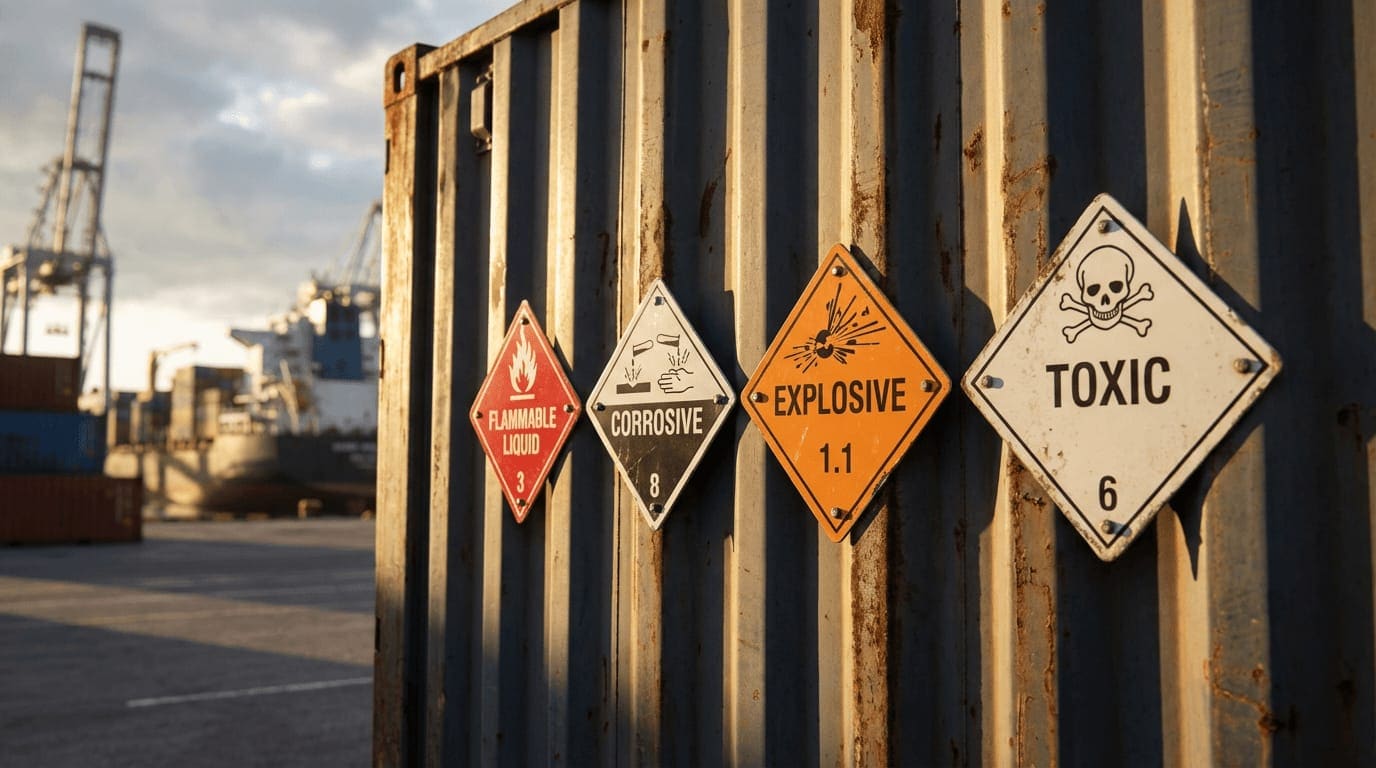
Dangerous goods
Shipping machinery with fuel, batteries and other dangerous goods
A machine with fuel, a wet, sodium or lithium battery or other hazardous materials is regulated in transport by road, sea and air[1]. Gasoline is drained to 500 mL or less, diesel may stay with room for expansion, and batteries stay installed, secured and protected[1].
What the rules require
A machine is not regulated if its engine, fuel lines and tank are drained, cleaned and purged, it has no battery and it contains no other hazardous materials. Otherwise the requirements of 49 CFR 173.220 apply[1].
Flammable liquid fuel such as gasoline is drained to 500 mL or less, with the system closed. A self-propelled diesel machine may keep its fuel if the tank has room for expansion and the cap is closed. Batteries are secured, wet batteries upright, and protected against short circuits[1].
Gas-fuelled machines shipped by air are emptied of gas, or their valves closed and the engine run until it stops for lack of fuel. By vessel, further rules in 49 CFR 176 apply to gas fuel systems[1].
Dangerous goods by method
| Method | Use it when | Avoid it when |
|---|---|---|
| RoRo | A diesel machine drives aboard with the tank not full and the batteries secured[1]. | It carries loose fuel cans or chemicals: those ship as dangerous goods in their own packaging. |
| Container or flat rack | The machine meets the same rules and the carrier accepts it in the box or on the rack[1]. | The carrier requires a dangerous goods declaration the shipper has not prepared. |
| Air | Fuel drained or gas systems emptied as the air rules require[1]. | The fuel cannot be removed. |
Container, flat rack, RoRo or breakbulk?
We quote in this order because it is usually cheapest first. Most machines that look too big for a box fit once our crew takes off the bucket, boom, cab or wheels; larger ones are taken further apart across several containers, and pieces too big or heavy for a flat rack or roll trailer go breakbulk.
01Container
- Work needed
- We partially disassemble when needed (bucket, boom, cab, wheels), or take larger machines further apart across several high-cubes and open-tops, then crate, block and lash every part.
- Destinations
- Widest: almost every port worldwide, plus inland delivery by rail.
- Typical cost
- Usually the lowest, with no out-of-gauge surcharges.
- Protection
- Sealed steel box; loose parts and attachments travel locked inside.
- Best for
- Most machines: compact ones as they are, others after partial disassembly, and large ones split across several containers.
02Flat rack
- Work needed
- Ships assembled, blocked and lashed. Surcharges apply when wider than 2.4 m or taller than about 1.95 m.
- Destinations
- Most container ports, on the same vessels as containers.
- Typical cost
- Moderate; rises with every centimetre out of gauge.
- Protection
- Open to the weather; we protect cabs, electronics and hydraulics.
- Best for
- Excavators, dozers and loaders too wide for a container door.
03RoRo
- Work needed
- Drives on assembled; non-runners go on a roll trailer.
- Destinations
- Fewer destinations: regular lanes to Europe, West Africa, the Middle East, Oceania and parts of Latin America.
- Typical cost
- Often competitive for large self-propelled machines where a lane exists.
- Protection
- Below deck, but loose items and attachments cannot ride inside the cab.
- Best for
- Running machines going to a port with regular RoRo sailings.
04Breakbulk
- Work needed
- Lifted aboard piece by piece by ship’s or shore cranes, on its own skids or cradle, then stowed and lashed in the hold or on deck.
- Destinations
- Ports with breakbulk berths and heavy-lift cranes; sailings are booked voyage by voyage.
- Typical cost
- Usually the highest for a single small machine; often the only option for the largest pieces.
- Protection
- In the hold or lashed on deck; we crate, wrap and protect exposed parts.
- Best for
- Pieces too large or heavy for a flat rack or roll trailer: transformers, process modules, mining trucks, crane sections.
Rules that apply
- Engines, vehicles and machinery as hazardous materials (49 CFR 173.220)PHMSA
A machine is regulated as a hazardous material when it carries fuel, a wet, sodium or lithium battery, or other hazardous materials. A tank of flammable liquid fuel such as gasoline is drained to 500 mL or less and closed; a self-propelled machine on diesel may keep its fuel if the tank has room for expansion and the cap is closed. Batteries stay installed and secured, wet batteries upright, with the terminals protected against short circuits.[1]
Applies to: Machines with fuel, batteries or other hazardous materials, by road, vessel or air
- SOLAS verified gross mass (VGM)IMO
Since 1 July 2016 the shipper must give a signed verified gross mass for each packed container, found by weighing the packed unit or by adding the weighed cargo, lashing and dunnage to the container tare. The carrier needs it before the stowage plan is drawn up; without it the container is not loaded.[2]
Applies to: Every packed container, flat rack and open top
- Electronic Export Information (15 CFR 30)U.S. Census Bureau
Electronic Export Information is filed in AES for each Schedule B number worth more than $2,500 going to one consignee on one conveyance, and for every vehicle whatever its value. For vessel cargo it is due at least 24 hours before loading; the Internal Transaction Number (ITN) goes to the carrier with the booking.[3][4]
Applies to: Any Schedule B line over $2,500, and every vehicle
Questions about dangerous goods
Does an excavator have to be drained of diesel?
Not for road or sea transport, if the tank has room for expansion and the cap is closed. A gasoline tank is drained to 500 mL or less.
Can a machine ship with its battery connected?
The battery must be securely installed, wet batteries upright, and protected against short circuits and damage to the terminals. Carriers may ask for it to be disconnected.
What about lithium batteries in electric machines?
They bring the machine under the hazardous materials rules. The battery type and state are declared at booking so the carrier can confirm acceptance.
Sources
Every figure on this page comes from the documents below, each checked on the date shown. Carriers and authorities revise them, so we confirm the current figure when we book.
- [1]eCFR, 49 CFR 173.220 Internal combustion engines, vehicles and machinery (hazardous materials), checked October 18, 2026
- [2]IMO, SOLAS verified gross mass requirement enters into force (1 July 2016), checked October 18, 2026
- [3]eCFR, 15 CFR 30.37 Miscellaneous exemptions (Foreign Trade Regulations), checked October 18, 2026
- [4]U.S. Census Bureau, Foreign Trade Regulations FAQs, checked October 18, 2026
Send us the machine and the destination
Give us the model or the measured dimensions and weight. We come back with the method, the sailing and a price, and the figures behind them.