Wheel Loaders Shipping
Wheel Loader Shipping & Transport Solutions
On This Page
Ship Your Wheel Loaders
Get expert advice on the best shipping solution for your equipment.
Related Equipment
Overview
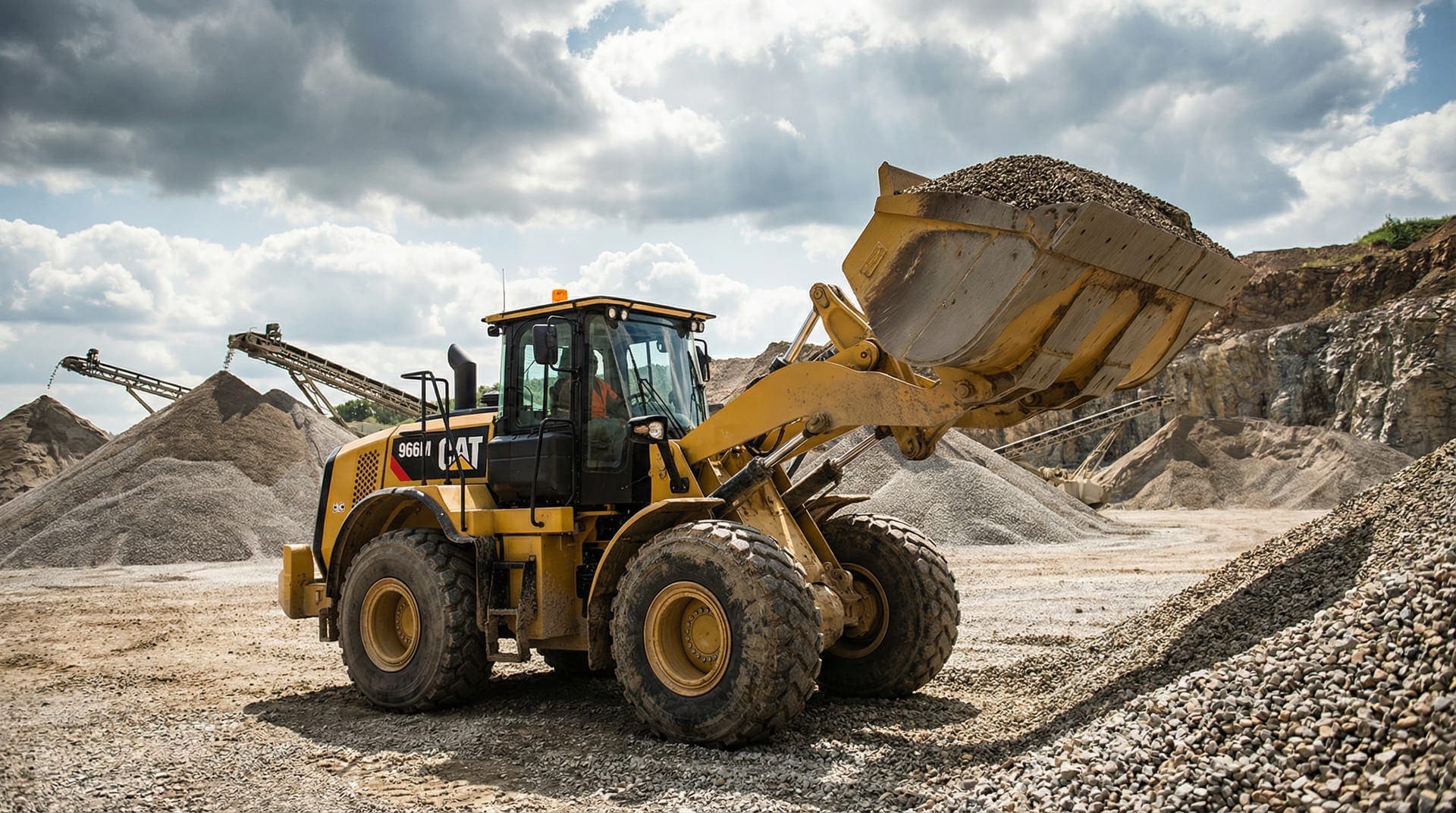
Wheel loaders are versatile machines used in construction, mining, agriculture, and material handling. Their rubber-tired design makes them ideal candidates for RoRo shipping, offering cost advantages over containerized or breakbulk methods.
We handle the complete range of wheel loaders from compact units for landscaping to massive mining loaders with bucket capacities exceeding 20 cubic meters.
Our logistics team coordinates everything from origin pickup through destination delivery, including inland trucking, port handling, and customs clearance.
Typical Specifications
| Weight Range | 3 - 250+ metric tons |
| Overall Width | 2.0m - 5.5m |
| Overall Height | 2.8m - 5.0m |
| Overall Length | 5.0m - 16.0m |
Recommended Shipping Methods
Container (after partial disassembly)
RecommendedCompact wheel loaders fit a 40 ft high-cube once we remove the bucket and, where needed, the ROPS or cab.
Flat Rack Container
RecommendedThe usual choice for loaders wider than a container door; out-of-gauge when wider than 2.4 m.
RoRo (Roll-on/Roll-off)
RecommendedExcellent option - loaders can drive on/off easily.
Breakbulk
For mining-class loaders (L-1850, 994K, WA1200).
Heavy Haul Trucking
RecommendedStandard for most loaders on inland routes.
Container, flat rack, RoRo or breakbulk?
We quote in this order because it is usually cheapest first. Most machines that look too big for a box fit once our crew takes off the bucket, boom, cab or wheels; larger ones are taken further apart across several containers, and pieces too big or heavy for a flat rack or roll trailer go breakbulk.
01Container
- Work needed
- We partially disassemble when needed (bucket, boom, cab, wheels), or take larger machines further apart across several high-cubes and open-tops, then crate, block and lash every part.
- Destinations
- Widest: almost every port worldwide, plus inland delivery by rail.
- Typical cost
- Usually the lowest, with no out-of-gauge surcharges.
- Protection
- Sealed steel box; loose parts and attachments travel locked inside.
- Best for
- Most machines: compact ones as they are, others after partial disassembly, and large ones split across several containers.
02Flat rack
- Work needed
- Ships assembled, blocked and lashed. Surcharges apply when wider than 2.4 m or taller than about 1.95 m.
- Destinations
- Most container ports, on the same vessels as containers.
- Typical cost
- Moderate; rises with every centimetre out of gauge.
- Protection
- Open to the weather; we protect cabs, electronics and hydraulics.
- Best for
- Excavators, dozers and loaders too wide for a container door.
03RoRo
- Work needed
- Drives on assembled; non-runners go on a roll trailer.
- Destinations
- Fewer destinations: regular lanes to Europe, West Africa, the Middle East, Oceania and parts of Latin America.
- Typical cost
- Often competitive for large self-propelled machines where a lane exists.
- Protection
- Below deck, but loose items and attachments cannot ride inside the cab.
- Best for
- Running machines going to a port with regular RoRo sailings.
04Breakbulk
- Work needed
- Lifted aboard piece by piece by ship’s or shore cranes, on its own skids or cradle, then stowed and lashed in the hold or on deck.
- Destinations
- Ports with breakbulk berths and heavy-lift cranes; sailings are booked voyage by voyage.
- Typical cost
- Usually the highest for a single small machine; often the only option for the largest pieces.
- Protection
- In the hold or lashed on deck; we crate, wrap and protect exposed parts.
- Best for
- Pieces too large or heavy for a flat rack or roll trailer: transformers, process modules, mining trucks, crane sections.
Handling & Preparation Requirements
- Lower bucket to deck/trailer
- Articulation lock engaged (if equipped)
- Fold mirrors and ROPS (if applicable)
- Tire pressure at transport specification
- Secure loose items in cab
- Document meter hours and condition
Wheel Loaders we have loaded in containers
A spread of machines from our dismantling and loading records, with the boxes each one went in. Open a brand to see every model and its plan.
Wheel loader
CAT 908
1 × 40 ft high cube
Caterpillar loading plansWheel loader
CAT 910
1 × 20 ft container
Caterpillar loading plansWheel loader
Komatsu WA 700-3L
1 × 40 ft open top + 3 × 40 ft high cube
Komatsu loading plansWheel loader
Komatsu WA400-1
2 × 40 ft high cube
Komatsu loading plansWheel loader
Volvo L220 E
2 × 40 ft high cube + 1 × 20 ft container
Volvo Construction Equipment loading plansWheel loader
Kawasaki 135ZIV
2 × 40 ft open top + 3 × 40 ft high cube
Kawasaki loading plansWheel loader
CAT 916
1 × 20 ft container
Caterpillar loading plansWheel loader
Komatsu 180-1
1 × 20 ft container
Komatsu loading plansWheel loader
Volvo 220D
2 × 40 ft high cube
Volvo Construction Equipment loading plansWheel loader
Volvo 4600B TD101G
1 × 40 ft high cube (overweight permit)
Volvo Construction Equipment loading plansWheel loader
Kawasaki 50Z IV
1 × 40 ft high cube
Kawasaki loading plansWheel loader
Kawasaki 60Z
1 × 40 ft high cube
Kawasaki loading plans
Common Models We Ship
Frequently Asked Questions
Are wheel loaders easier to ship than tracked equipment?
Generally yes - wheel loaders can drive under their own power, making RoRo loading/unloading faster and simpler than tracked machines.
Do loaders require special tire handling?
Large loader tires should be at proper inflation for transport. Some carriers require blocking under axles to protect tires during ocean transit.
Can attachments ship with the loader?
Standard buckets typically remain. Quick couplers, forks, and specialty attachments may ship separately depending on size.
Plan your shipment
Import Duty & Tax Estimator
Estimate duty and VAT on the CIF value for 70+ destinations.
Dimensional Weight Calculator
Work out chargeable weight before you book.
Container Space Calculator
See how your cargo fits in 20ft, 40ft, and HC containers.
Route Finder
Load port, sailings, duty and rules for a machine and destination.
Ready to Ship Your Wheel Loaders?
Get a customized quote for your equipment. Our experts handle wheel loaders shipments worldwide.